



Many people know composting helps keep organic materials out of landfills, but not all composting systems work the same way. While backyard composting can be a great way to recycle food scraps and yard waste at home, industrial composting facilities are designed to process larger volumes of material more quickly and under carefully controlled conditions. Understanding the differences can help explain why some items can be composted commercially but not in a backyard pile, and why industrial composting plays an important role in managing organic waste on a larger scale.
Industrial composting is generally more effective than backyard composting for large volumes because it operates in controlled, optimized conditions. These differences are especially clear when looking at scale, temperature, and safety.
SCALE
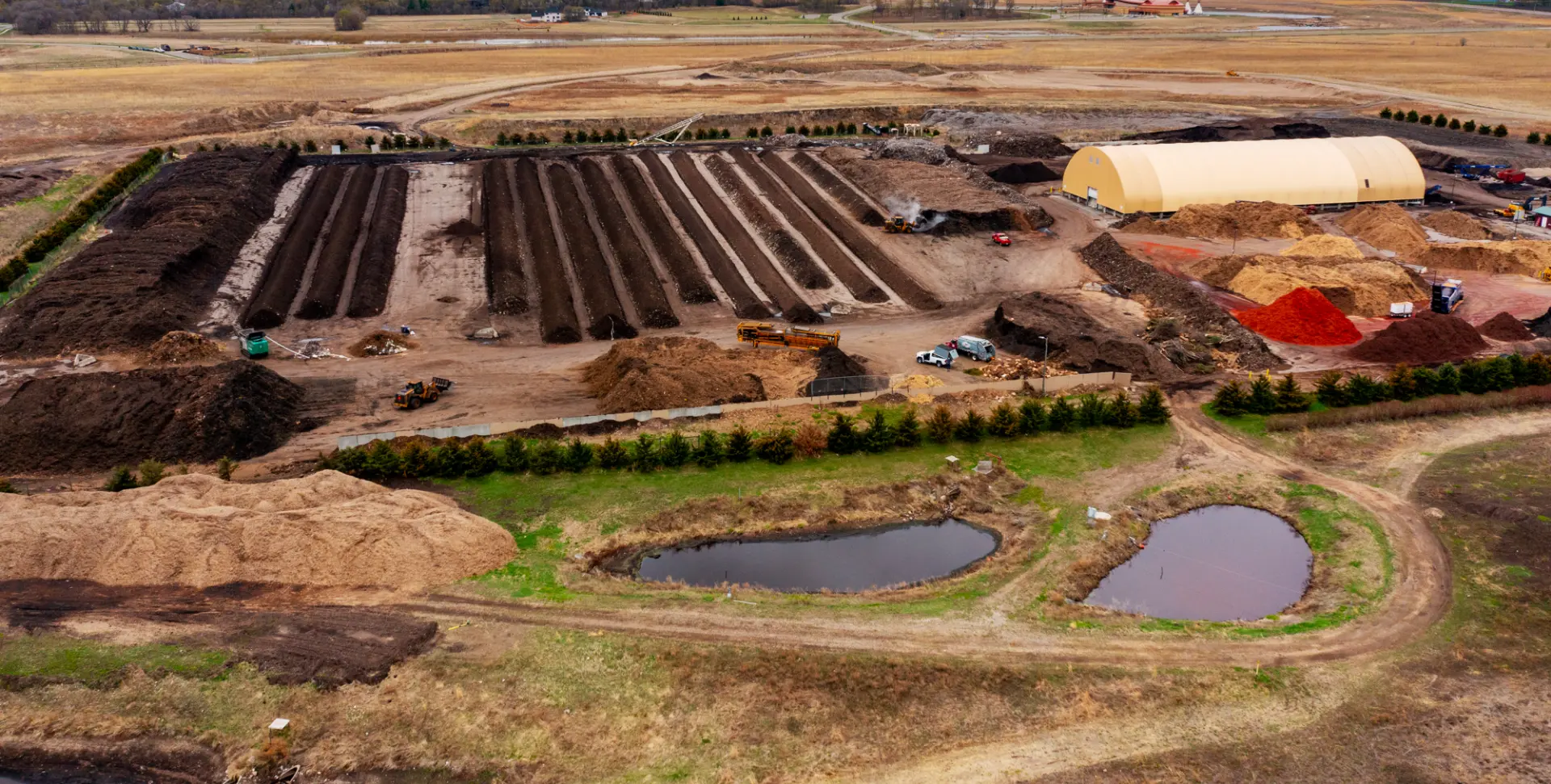
Industrial composting systems are built to handle large volumes of organic waste efficiently. Facilities like Dakota Prairie Composting are designed to process materials from entire communities, including food waste, yard debris, and compostable products. Dakota Prairie Composting:
- Processes large quantities at once, often measured in tons.
- Uses specialized equipment like grinders and aeration systems.
- Operates continuously for faster, more consistent results.
In contrast, backyard composting is limited to what a household can produce and manage on its own. It depends on manual effort and smaller compost piles, which slows the process and limits what can realistically be composted.
TEMPERATURE
Temperature is one of the most important factors in how quickly and completely composting happens. Industrial systems like Dakota Prairie Composting can maintain high and consistent heat levels through careful management. Dakota Prairie Composting’s process:
- Typically reaches 140 to 160 degrees Fahrenheit.
- Speeds up decomposition significantly.
- Breaks down tougher materials like meat, dairy, and compostable packaging.
- Kills weed seeds and harmful pathogens.
Backyard compost piles usually do not reach these temperatures or sustain them for long. They depend on environmental conditions such as weather, pile size, and how often they are turned. As a result, decomposition is usually slower and less complete.
SAFETY
Safety is another major advantage of industrial composting, especially when it comes to producing a reliable product. Industrial systems like Dakota Prairie Composting are carefully monitored to ensure proper conditions throughout the process. This leads to compost that is stable and safe to use because:
- High heat kills weed seeds and pathogens.
- Controlled systems reduce contamination.
- The final compost meets established safety standards.
Backyard composting is less controlled and can vary widely in quality. If the pile does not heat properly or is not managed well, it may:
- Fail to eliminate harmful microbes.
- Contain weed seeds.
- Attract pests such as rodents or insects.
FINDING THE RIGHT FIT
Backyard composting can be a great option for households with the space and time to manage a compost pile. It allows residents to turn food scraps and yard waste into a useful resource right at home. However, not everyone has the ability to compost on their property, and some materials, such as meat, dairy, and many certified compostable products, require the higher temperatures and controlled conditions found in an industrial composting facility.
That’s where Dakota Prairie Composting’s Household Organics Recycling Program comes in. The program gives residents a convenient way to divert food scraps and other compostable materials from the landfill without maintaining a backyard compost pile. Participants can collect organic materials at home and bring them to a designated drop-off location, where they become part of Dakota Prairie Composting’s large-scale composting process.
WHY CHOOSE DAKOTA PRAIRIE COMPOSTING
Industrial composting is more effective for large volumes of waste because it combines large-scale processing, consistent high temperatures, and controlled safety measures. Backyard composting still provides value for small amounts of organic waste, but it cannot match the efficiency, speed, and reliability of industrial systems. And Dakota Prairie Composting’s Household Organics Recycling Program can help fill the gap between the two!
Dakota Prairie Composting offers a variety of services, including compost and mulch delivery, depackaging, and wood grinding, among others. Dakota Prairie Composting is located at 12386 Chestnut Blvd., Shakopee, MN 55379. Stop by for all your compost and mulch needs!
