


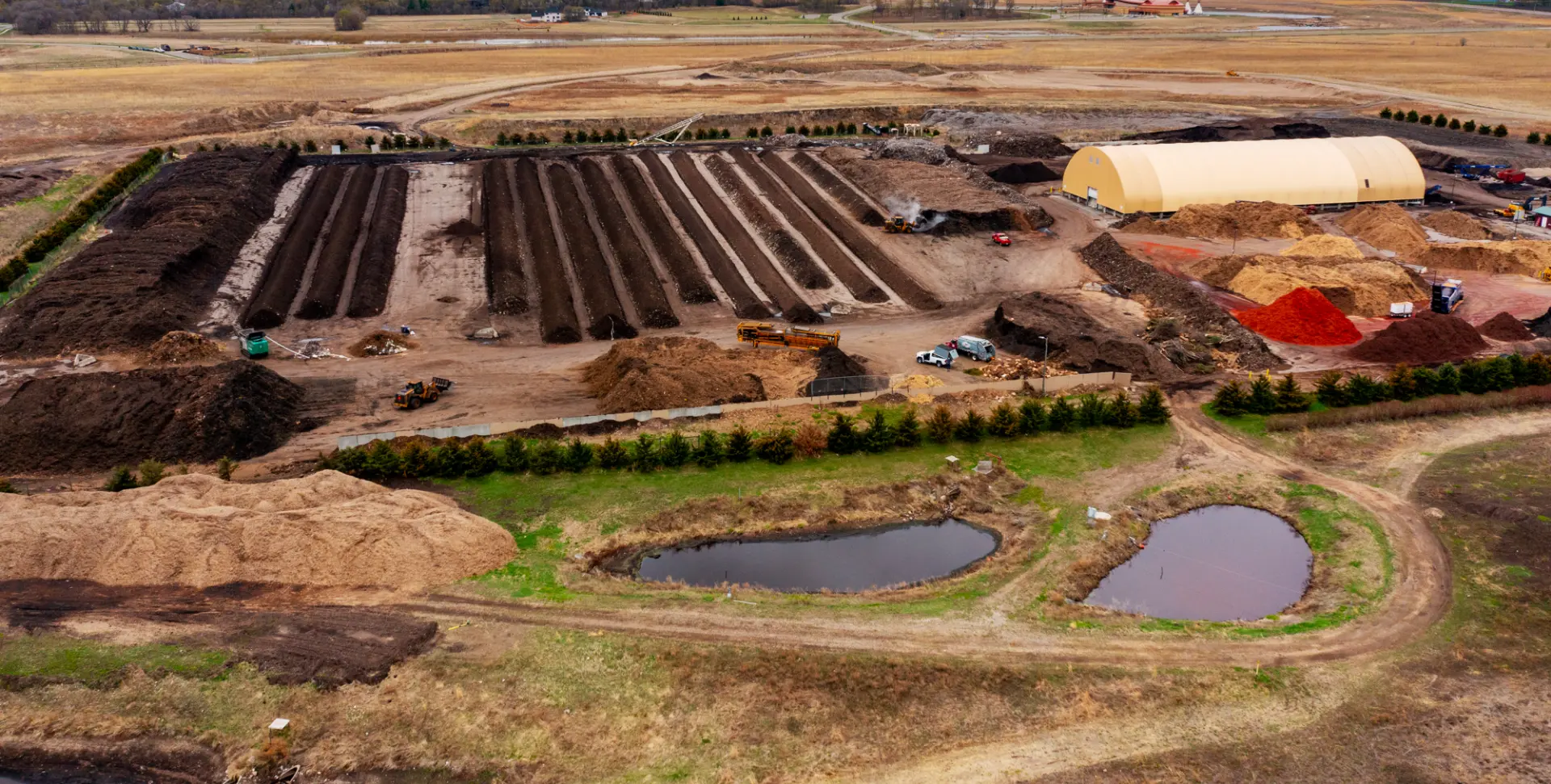

Several local farmers use Dakota Prairie Composting (DPC) compost as a soil amendment to improve the health and productivity of their crops. Because it’s produced through industrial, high-heat composting, it’s nutrient-rich, stable, and safe, making it a valuable tool in agricultural practices.
IMPROVING SOIL HEALTH
DPC’s compost is commonly added to fields to build healthier soil over time. Farmers spread it before planting or incorporate it into the soil during field preparation. It serves to:
- Add organic matter, which improves soil structure.
- Increase the soil’s ability to retain moisture.
- Reduce compaction and improve root growth.
Healthier soil allows crops to access water and nutrients more easily, which supports stronger and more consistent growth.
SUPPLYING NUTRIENTS
One of the main ways farmers use compost is as a natural source of nutrients. Instead of relying entirely on synthetic fertilizers, compost provides a steady release of essential elements, which:
- Supplies key nutrients such as nitrogen, phosphorus, and potassium.
- Releases nutrients slowly, reducing the risk of runoff.
- Helps maintain long-term soil fertility rather than short-term boosts.
This slow, steady nutrient release helps crops grow more sustainably and reduces the need for chemical inputs.
ENHANCING CROP YIELDS AND QUALITY
By improving soil conditions and nutrient availability, compost can directly support better crop performance. Farmers often see stronger plants and improved yields when compost is used regularly. Crops may also develop more evenly, with better color and structure, which supports consistent plant growth, can increase yields over time, and improves the quality and appearance of produce.
Contact DPC today if you’d like to try adding compost to your farming operation!
SUPPORTING SOIL BIOLOGY
DPC’s compost is rich in beneficial microorganisms that play a key role in soil health. Farmers rely on these microbes to create a more active and resilient soil ecosystem by:
- Introducing beneficial bacteria and fungi.
- Helping break down organic matter into usable nutrients.
- Supporting natural processes that protect plant roots.
A biologically active soil is better able to support crops and recover from stress such as drought or heavy rainfall.
REDUCING ENVIRONMENTAL IMPACT
Using compost also helps farmers adopt more sustainable practices. They close the loop between waste and food production by recycling organic waste into compost and applying it to fields. This process reduces reliance on synthetic fertilizers, helps prevent nutrient runoff into waterways, and stores carbon in the soil, supporting climate benefits.
A BRAND FARMERS TRUST
Local farmers use DPC’s products and services as a practical and sustainable way to enrich their crops. By improving soil structure, providing nutrients, supporting soil biology, and reducing environmental impact, it helps create healthier fields and more productive farms over time.
